
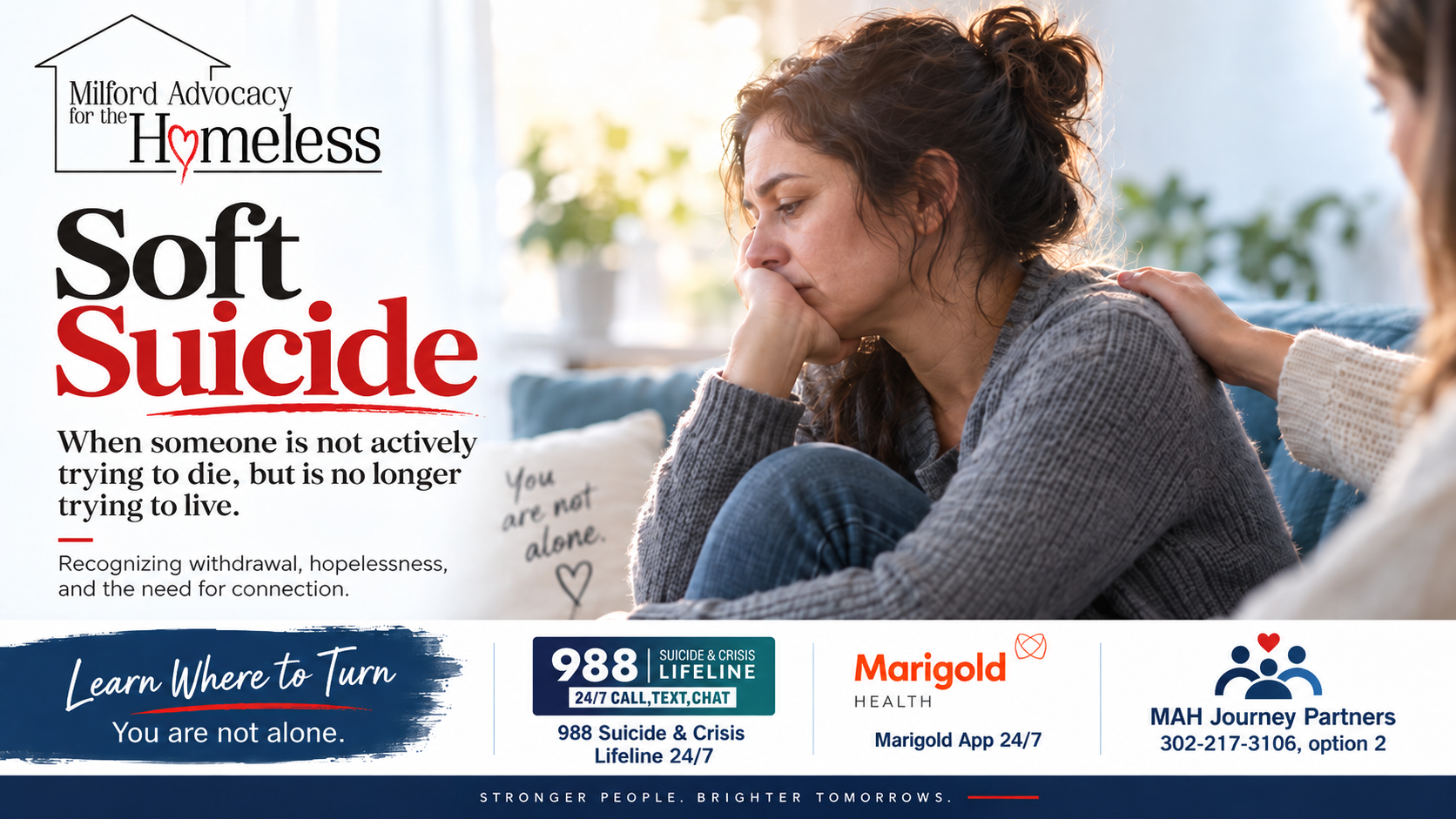
There are times when a person may not say, “I want to die,” and may not have an active suicide plan, but something has clearly changed. They may stop taking care of themselves, withdraw from people they love, miss medical appointments, stop taking needed medications, begin taking greater risks, or simply seem to stop caring what happens to them.
Sometimes people use the phrase “soft suicide” to describe this kind of behavior. It is important to understand that “soft suicide” is not a formal clinical diagnosis. What people are often describing may overlap with passive suicidal thoughts, severe depression, hopelessness, self-neglect, substance use, or other mental health challenges. Passive suicidal ideation can include thoughts about death or not wanting to be alive without having a specific plan to harm oneself. Whatever words are used, one thing matters most: a person does not have to be actively planning suicide for their pain to deserve attention and support.
It May Sound Different Than We Expect
Suicidal distress does not always sound like, “I am going to kill myself.” Sometimes it sounds more like, “I don’t care anymore,” “Everyone would be better off without me,” “I’m tired of fighting,” “If something happened to me, I wouldn’t care,” or “I just want everything to stop.” In other cases, a person may say nothing at all. Changes in behavior can sometimes tell us that someone is struggling. They may become increasingly isolated, lose interest in things that once mattered, neglect their health or safety, increase their use of alcohol or drugs, or seem unusually hopeless about the future.
None of these signs automatically means someone is suicidal, but they can be a reason to check in and offer support.
Ask the Question
Many people hesitate to reach out because they are afraid of saying the wrong thing. You do not need the perfect words. You can simply say, “You haven’t seemed like yourself lately. How are you really doing?” Give the person time to answer, listen without rushing to fix the problem, and try not to tell them why they should feel differently. If you are worried about suicide, it is okay to ask directly, “Are you thinking about suicide?”
Taking someone seriously, listening with compassion, and helping them connect with support can be an important first step.
You Do Not Have to Wait for a Crisis
One of the most important messages of our Learn Where to Turn campaign is that 988 is not only for the moment when someone is about to attempt suicide. The 988 Suicide & Crisis Lifeline is available for people experiencing emotional distress, mental health struggles, concerns related to alcohol or drug use, suicidal thoughts, or simply a moment when they need someone to talk with. Support is available 24 hours a day, 7 days a week, and people can call or text 988 for free, confidential help. You can also contact 988 because you are worried about someone else.
You do not have to decide whether someone’s situation is “serious enough” before reaching out.
Learn Where to Turn
Different people need different kinds of support, and knowing where to turn can make it easier to take the next step.
- 988 Suicide & Crisis Lifeline, 24/7 provides immediate emotional and crisis support by phone or text. Call or text 988 to connect with a trained crisis counselor.
- Marigold App, 24/7 provides peer-based support for people facing mental health and substance use challenges and can offer another way to connect when someone needs encouragement, understanding, or community.
- MAH Journey Partners offers ongoing, relationship-based support for people who may need someone to continue walking alongside them after the immediate moment has passed. To connect with MAH Journey Partners, call 302-217-3106, option 2.
For Family and Friends
Watching someone you love stop caring for themselves can leave you feeling frightened, confused, or helpless. You do not have to carry that responsibility alone. Checking in, staying connected, sharing resources, and offering to sit beside someone while they make a call or send a text can make it easier for them to reach out. If they are willing, you can also help them connect with ongoing support after the immediate crisis has passed. It is equally important to remember that supporting someone through mental health challenges can be emotionally exhausting. Family members and friends deserve support too, and reaching out for guidance is appropriate.
When Someone Is Slowly Disconnecting
A person does not have to say, “I want to die,” to need help. Sometimes the warning sign is withdrawal, hopelessness, giving up on medical care, disconnecting from relationships, or losing concern for personal safety. These moments deserve attention, compassion, and connection. They should not be dismissed simply because there is no stated suicide plan.
At Milford Advocacy for the Homeless, we believe in meeting people where they are and walking alongside them as they work toward stability and hope. Part of that commitment is making sure people in our community know where to turn before a difficult day becomes an unbearable one.
If you or someone you care about needs support, call or text 988, connect through the Marigold App, or contact MAH Journey Partners at 302-217-3106, option 2.
You are not alone. Learn Where to Turn.
 Facebook
 Twitter
 Linkedin


